
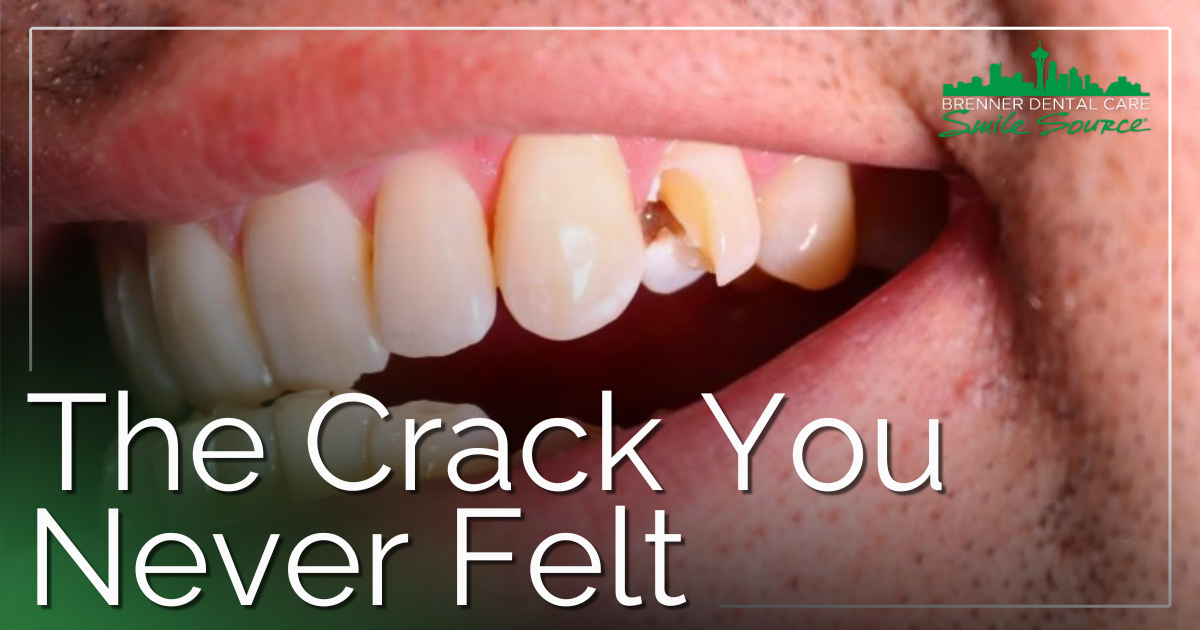
Did You Know Your Teeth Can Crack Without You Realizing It?
Your teeth handle incredible pressure every day, and they don’t always tell you when they’re under strain. Your teeth are pretty tough customers.
Think about everything you ask them to handle in an average week. They crunch, chew, bite, deal with hot coffee followed by cold water, and occasionally encounter that one unexpectedly hard popcorn kernel. Most of the time, they manage all of this without getting much appreciation from us. But even strong teeth can wear down. In fact, tiny cracks can develop without causing any discomfort.
Your Teeth Handle More Pressure Than You Realize
Enamel is remarkably strong, which matters given how often we use our teeth. Every time you chew, pressure travels through them. Your bite normally helps distribute those forces, but certain teeth may experience extra stress because of how your teeth come together, your habits, or what you bite.
Clenching and grinding can add another layer. Because grinding often happens while you sleep, you may be completely unaware that your teeth are putting in overtime while the rest of you is supposed to be taking the night off. We’ve talked about how repeated grinding and clenching can create microscopic cracks over time.
Not Every Crack Makes Itself Known
We tend to associate a cracked tooth with a dramatic moment. You bite something hard, feel something break, and immediately know what happened. In real life, it’s not always that obvious.
Some cracks are extremely small, and a tooth may feel completely normal at first. Other times, you might notice an occasional sensation when you bite a certain way or some temperature sensitivity, but the feeling can come and go. That unpredictability is one reason we don’t rely on discomfort alone to tell us how a tooth is doing.
Everyday Habits Can Add Up
Teeth are designed for chewing food, but sometimes we give them a few extracurricular activities. Chewing ice, biting hard candy or popcorn kernels, and using your teeth to open or hold things can create concentrated forces that teeth were never really meant to handle. Older or heavily restored teeth may also respond differently to pressure than teeth with more of their original structure intact.
This doesn’t mean you need to spend your day worrying about every bite. It simply helps to remember that strong and indestructible aren’t quite the same.
Your Bite Is Part of the Picture Too
We pay attention to your bite to understand how your teeth work together. If certain teeth are taking more force than others, that pattern can matter over time. We may also see signs of wear you would never notice yourself, especially if you grind or clench at night. Our preventive approach includes looking at factors such as stress, lifestyle, and grinding that can affect the long-term health of your teeth.
This is also where our whole-health perspective comes in. What is happening with your teeth may be related to sleep, stress, jaw comfort, and other aspects of how you feel, so we like the complete picture.
Give Your Hardworking Teeth a Little Credit
The takeaway here isn’t that your teeth are secretly cracking while you’re happily going about your day. It’s actually the opposite. Your teeth are incredibly durable, and with good daily care, regular dental visits, and a little common sense about what you ask them to bite, they can handle an impressive amount of work.
So, keep enjoying the foods you love, and let your teeth do what they were designed to do. Just consider giving the ice cubes and stubborn packages a pass, and if something ever does start to feel different, even if you can’t quite explain what it is, tell us. We know your dental history, and we’re always happy to take a closer look.
If it’s time for your next appointment, call our office located in Seattle, WA. We look forward to seeing you, catching up, and helping those hardworking teeth stay healthy and strong.